
Arthritis Is Not One Condition

There are many types of arthritis, each affecting the body differently. Learn what you’re experiencing and take the first step toward better joint care.

Understand Your Arthritis →

Arthritis Is Not One Condition
Understanding the Type of Arthritis Types of Arthritis Autoimmune VS Non-Autoimmune Living and Managing

Why Understanding the Type of Arthritis Matters

Arthritis may present with common symptoms such as joint pain, stiffness, and swelling, but the reasons behind these symptoms can vary widely from one person to another. Some types of arthritis are caused by an overactive immune system, others develop due to wear and tear of the joints, metabolic imbalances, or even infections. Because of this, the same treatment approach does not work for everyone.

Accurately identifying the type of arthritis is essential for choosing the right course of care. What helps manage one form of arthritis may be ineffective, or even harmful for another. Early and correct diagnosis allows healthcare providers to control inflammation, slow disease progression, and reduce the risk of permanent joint damage.

Understanding your specific type of arthritis also empowers you to make informed decisions about your health. With the right treatment plan, movement guidance, and lifestyle support, many people with arthritis can stay active, maintain independence, and improve their overall quality of life.
Why Understanding the Type of Arthritis Matters

Common Types of Arthritis

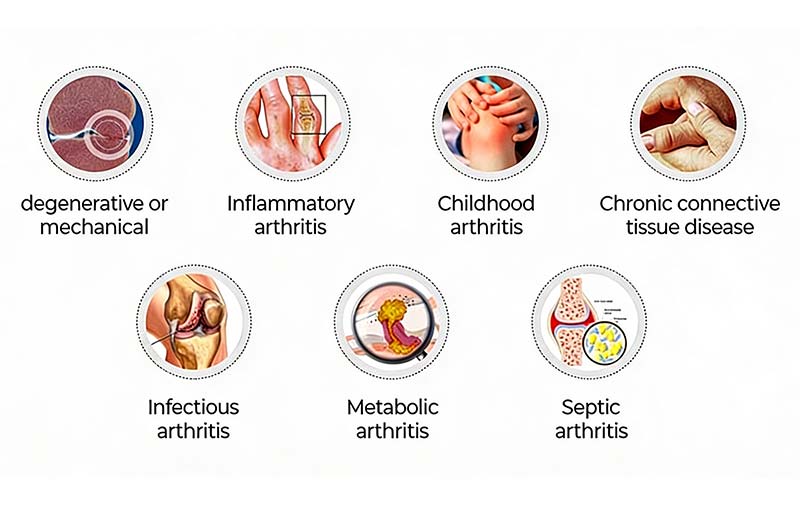
Arthritis can be broadly classified into several categories based on its cause and disease mechanism.

Inflammatory Arthritis

Inflammatory arthritis is often caused by an overactive immune system that mistakenly attacks healthy joint tissues. This leads to chronic inflammation, pain, and stiffness, especially in the morning or after periods of rest.

Includes:

Degenerative Arthritis

Degenerative arthritis occurs due to gradual wear and tear of the joints over time. It is more common with aging but can also result from joint injuries or repetitive stress.

Includes:

  • Osteoarthritis

Metabolic Arthritis

Metabolic arthritis results from abnormal metabolism that leads to crystal deposits forming in the joints.

Includes:

  • Gout
  • Pseudogout

Infectious Arthritis

Infectious arthritis develops when bacteria, viruses, or fungi directly infect a joint. This form often appears suddenly and requires urgent medical care.

Includes:

  • Septic Arthritis
  • Post-infectious Arthritis

Juvenile Arthritis

Juvenile arthritis affects children and adolescents and can interfere with normal growth and development if not managed properly.

Includes:

Difference Between Autoimmune and Non-Autoimmune Arthritis

Learn how these two categories of arthritis differ in cause, progression, and treatment approach.

Aspect Autoimmune Arthritis Non-Autoimmune Arthritis
Underlying Cause Immune system mistakenly attacks healthy joint tissue Joint wear and tear, infection, or metabolic imbalance
Nature of Inflammation Chronic and persistent inflammation Inflammation may be mild, episodic, or mechanical
Common Examples Rheumatoid Arthritis, Ankylosing Spondylitis, Psoriatic Arthritis Osteoarthritis, Gout, Septic Arthritis
Onset Pattern Gradual or flare-based Gradual (degenerative) or sudden (infectious/metabolic)
Primary Treatment Focus Immune-modulating and disease-controlling therapies Pain relief, joint protection, and symptom management
Risk of Joint Damage Higher if untreated or poorly controlled Depends on severity and duration
Long-Term Management Ongoing medical care and lifestyle support Joint preservation and functional maintenance

Living and Managing Arthritis

Living with arthritis is about more than managing pain, it’s about building daily habits that protect your joints, support mobility, and improve overall well-being. With the right combination of medical care, movement, and lifestyle choices, many people with arthritis lead active and fulfilling lives.

  • Stay Physically Active
    Gentle, guided movement helps reduce stiffness and maintain joint flexibility
  • Protect Your Joints
    Use proper posture, supportive tools, and joint-friendly techniques
  • Manage Weight and Nutrition
    Balanced nutrition and healthy weight reduce stress on joints
  • Pace Daily Activities
    Balance activity and rest to avoid flare-ups
  • Support Mental Well-being
    Managing stress and emotional health improves symptom control
  • Follow a Care Plan
    Regular check-ups and treatment adherence support long-term joint health

Insights on Arthritis

What’s new in our journey against arthritis and spondylitis.

Frequently Asked Questions

How many types of arthritis are there?

+
There are over 100 recognized types of arthritis and related conditions.

What is the most common type of arthritis?

+
Osteoarthritis is the most common form worldwide.

Is arthritis always autoimmune?

+
No. Only certain types, such as rheumatoid arthritis, are autoimmune.

Can arthritis affect young people?

+
Yes. Some forms, like juvenile arthritis, affect children and adolescents.

Can arthritis be cured?

+
While most types cannot be cured, proper treatment can control symptoms and improve quality of life.

What is inflammatory arthritis?

+
Inflammatory arthritis occurs when the immune system attacks healthy joint tissues, causing chronic pain, stiffness, and swelling.

Can arthritis cause permanent joint damage?

+
Yes, untreated or poorly controlled autoimmune arthritis can damage joints, while non-autoimmune arthritis risk depends on severity and duration.
Dark Blue Arrow
Join Now Insights Patient Stories