
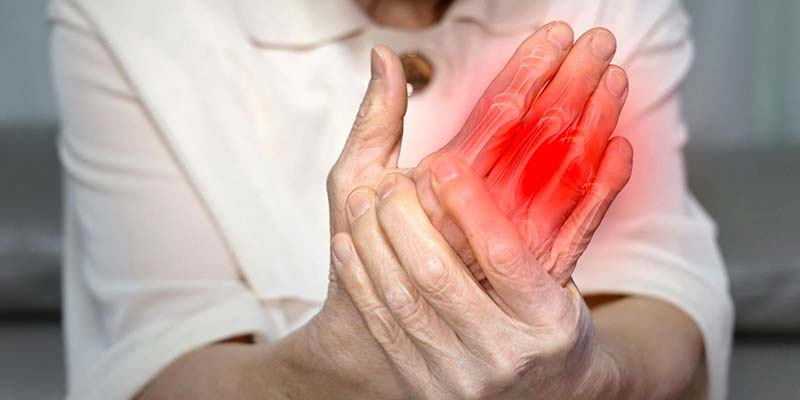
Rheumatoid Arthritis (RA) is a chronic autoimmune disease. It causes pain, swelling, stiffness, and reduced movement in the joints.
RA can affect anyone. But women carry a much heavier burden. Not only do women develop RA more often, but they also experience more frequent flares, worse fatigue, and symptoms that shift unpredictably over time.
The biggest reason? Hormones. Throughout a woman’s life, puberty, menstruation, pregnancy, and menopause cause hormones to constantly change. Since rheumatoid arthritis is an immune-driven disease, these hormonal shifts directly affect how active or quiet the disease is.
This blog explains:
Rheumatoid Arthritis (RA) is an autoimmune disease. The immune system mistakenly attacks healthy joint tissue instead of protecting it. While the exact causes of rheumatoid arthritis are still being researched, experts believe a combination of genetics, hormones, immune dysfunction, smoking, infections, and environmental triggers all play a role.
Women’s immune systems are naturally more active than men’s. This helps fight infections better. But it also raises the risk of autoimmune diseases where the immune system turns against the body itself.
Conditions like RA, lupus, and multiple sclerosis are all far more common in women. Women are 2–3 times more likely to develop Rheumatoid Arthritis than men with a confirmed female-to-male ratio of approximately 3:1. This is not a coincidence. It is biology.
Source: Maranini et al., Journal of Personalized Medicine, 2022What makes women more vulnerable?
In short: women’s immune systems are more sensitive. When combined with lifelong hormonal changes, this creates more opportunities for RA to flare.
Hormones are chemical messengers. They regulate everything from mood and metabolism to inflammation and immune response.
For women with RA, shifts in hormone levels can mean the difference between a calm week and a painful flare.
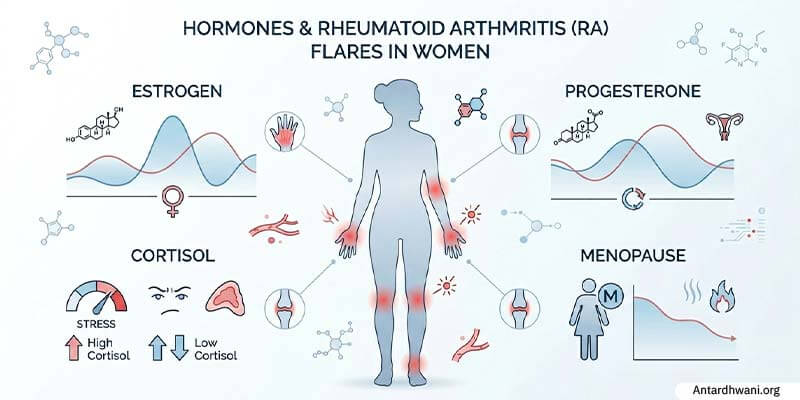
Estrogen plays a complex role in RA.
When estrogen is high: It can calm the immune system and reduce inflammation. This is why many women feel better during pregnancy – estrogen levels are at their peak.
When estrogen drops: : inflammation increases. Many women notice worse joint pain and stiffness just before their period – when estrogen falls sharply.
So what does this mean for you? If you notice that your symptoms seem to follow a monthly pattern, it’s possible that your menstrual cycle is having an impact. Try keeping track of your symptoms and see how they match up with your cycle. Then, be sure to share what you’ve found with your rheumatologist – they can help you figure out what’s going on and find a way to make things more manageable.
Progesterone generally calms the immune system.
Pregnancy can be a time of relief for women with rheumatoid arthritis (RA). One reason for this is that a certain hormone, similar to estrogen, increases during pregnancy. After giving birth, however, another hormone called progesterone drops, and this change can cause the immune system to become more active. As a result, many women experience a return of their RA symptoms, known as a postpartum flare, which can be quite common.
Cortisol helps control inflammation. But chronic stress throws it out of balance. Many women manage multiple roles simultaneously – work, caregiving, and household responsibilities. Over time, prolonged stress reduces the body’s ability to keep inflammation in check.
Signs that stress is worsening your RA:
When women go through menopause, estrogen levels drop sharply and never recover. For many women with RA, this is when symptoms escalate most significantly.
It is worth noting that an estimated 17.6 million people were living with RA worldwide in 2020 – a figure projected to reach 31.7 million by 2050 – and the majority of this burden falls on women, with hormonal transitions like menopause playing a significant role in driving disease activity over a lifetime.
Source: GBD 2021 – The Lancet Rheumatology, 2023What women often notice after menopause:
Treatment plans often need review and adjustment during this stage.
| Life Stage | Hormone Change | Common RA Effect |
| Menstruation | Estrogen drops before a period | Increased pain and stiffness pre-period |
| Pregnancy | Estrogen and progesterone rise | Symptoms often improve, especially in 2nd trimester |
| Postpartum | Hormones drop sharply | High risk of flare within weeks of delivery |
| Perimenopause | Hormones fluctuate erratically | Unpredictable flares, new fatigue |
| Menopause | Estrogen falls permanently | Increased disease activity, joint stiffness, treatment changes may be needed |
Living with rheumatoid arthritis is hard for anyone. But women often carry additional burdens physical, emotional, and social.
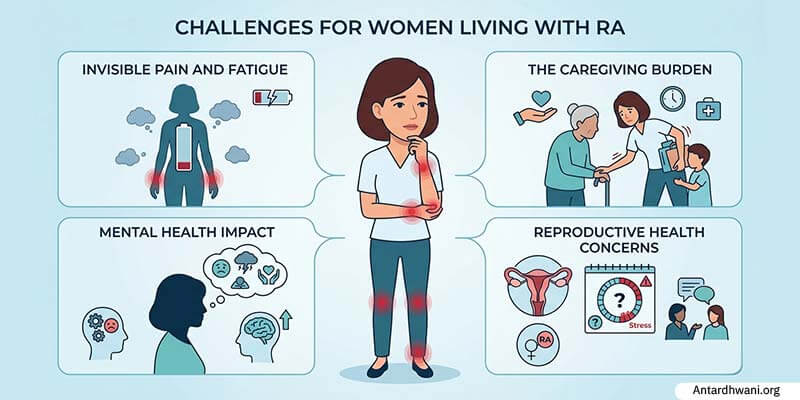
Women with RA frequently report severe fatigue exhaustion that does not improve with sleep. This type of fatigue is invisible and difficult to explain at work or to family members. Hormonal fluctuations make it worse, especially around periods and during perimenopause.
Common invisible symptoms women report:
Many women are the primary caregiver for children, elderly parents, or other family members. Managing RA while caring for others is physically and emotionally demanding. Women often put others first, delaying rest, postponing medication adjustments, and skipping self-care.
If this sounds familiar: looking after yourself is not selfish. It is necessary.
RA and mental health are closely connected. Global RA prevalence has increased by 14.1% since 1990, and alongside rising case numbers, the psychological toll, particularly on women has become impossible to ignore.
Source: GBD 2021 – The Lancet Rheumatology, 2023Women with RA are more likely to experience:
Mental health is still under-discussed in RA care. It deserves as much attention as joint health.
Because hormones influence RA, treatment for women often needs to be more personalised than standard protocols suggest.
Some women experience predictable flares linked to their menstrual cycle. In these cases, your doctor may:
Tip: Keep a symptom diary for 2–3 months. Note flare dates alongside your cycle. This gives your rheumatologist precise information to work with.
Close teamwork between your rheumatologist and obstetrician is essential before, during, and after pregnancy.
Key points:
Menopause is a time to reassess your entire treatment plan. What worked before may not work as well once estrogen levels fall.
Steps to take:
Hormone Replacement Therapy (HRT) has been studied in postmenopausal women with RA. It is not a standard treatment and should only be considered after a careful, personalised medical consultation.
| Strategy | Why It Helps |
| Stress management (yoga, breathing, mindfulness) | Lowers cortisol, reduces immune overactivity |
| Regular low-impact exercise (walking, swimming) | Maintains joint flexibility, supports mood |
| Anti-inflammatory diet (omega-3, turmeric, leafy greens) | Reduces background inflammation |
| Consistent sleep routine (7–8 hours) | Regulates hormones and calms immune response |
| Limiting alcohol | Alcohol worsens inflammation and interacts with medications like methotrexate |
| Quitting smoking | Smoking makes RA medications less effective and worsens disease outcomes |
RA affects women differently. Not just in how often it occurs but in how it behaves across a lifetime.
Estrogen, progesterone, and cortisol shape the immune system. They influence flare patterns, symptom severity, and treatment outcomes. From the first period to the last, hormonal transitions make RA unpredictable and exhausting.
Added to this are caregiving responsibilities, invisible fatigue, mental health pressures, and reproductive concerns that many women navigate largely on their own.
Understanding this hormonal connection gives women the tools to recognise their patterns. It helps them ask for more personalised care. And it reminds them that what they experience is real, valid, and worth treating properly.
With the right medical support, hormone-aware care, and guidance from a trusted rheumatoid arthritis support group, women with RA can feel more supported, achieve better symptom control, and improve their overall quality of life.
Living with RA and want to understand your symptoms better? Reach out to our team at Antardhwani or meet our specialist doctors for personalised guidance.


Living with AS or RA in India? This guide covers daily symptom management, real treatment costs, insurance gaps, mental health,…

Autoimmune diseases are rising sharply among young Indians. Discover the key causes lifestyle changes, stress, diet, and pollution and learn…

Whether rheumatoid arthritis can be cured permanently. Learn about treatment options, remission, lifestyle changes, and early diagnosis for better outcomes.