
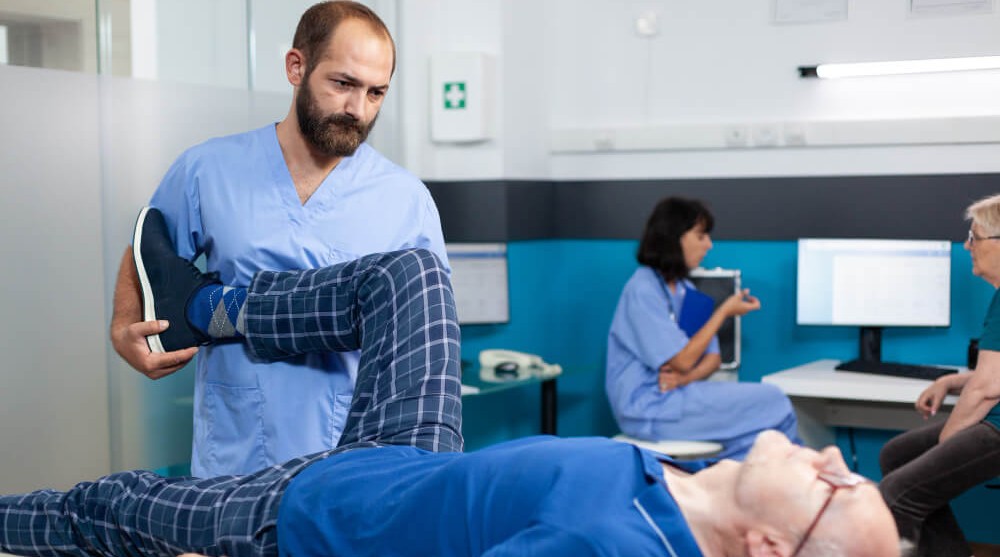
Living with ankylosing spondylitis is a long-term challenge that affects spinal mobility, posture, and daily comfort. Many patients ask, “How serious is ankylosing spondylitis?” The answer depends largely on how early and consistently it is managed. While medications control inflammation, physical therapy for ankylosing spondylitis plays a central role in preserving movement, reducing stiffness, and maintaining quality of life.
This blog covers the role of physiotherapy in AS, how movement impacts disease progression, and what patients can realistically expect from a structured therapy plan.
Physiotherapy takes a comprehensive approach to managing spondylitis pain, going beyond short-term symptom relief to support long-term mobility and independence. The physical therapy for ankylosing spondylitis approach primarily focuses on:
Unlike passive treatments, physiotherapy requires active participation through guided exercises and lifestyle modifications, making it one of the most effective ankylosing spondylitis therapies available.
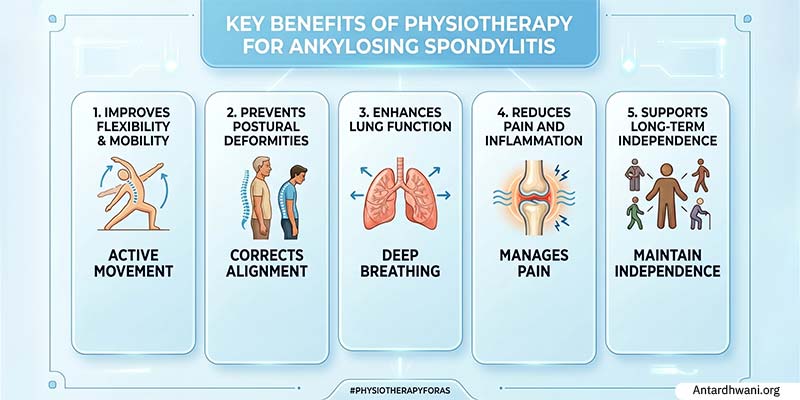
Improves Flexibility & Mobility
Regular stretching and guided mobility work help maintain joint range of motion and reduce stiffness, especially in the morning. Over time, consistent exercise for ankylosing spondylitis makes daily movements smoother and more comfortable.
Reduces Pain and Inflammation
Specific physiotherapy techniques relax tense muscles, improve circulation, and reduce inflammation-related swelling. Effective managing spondylitis pain can often be achieved without increasing medication.
Prevents Postural Deformities
Postural training and spinal strengthening help patients maintain correct alignment and prevent the forward-stooping posture associated with later stages of ankylosing spondylitis.
Enhances Lung Function
Breathing and rib cage expansion exercises maintain chest mobility — essential as AS can progressively restrict respiratory movement.
Supports Long-Term Independence
A consistent physiotherapy routine builds strength, balance, and coordination, enabling patients to manage daily activities independently well into the future.
During flare-ups, pain, stiffness, and fatigue intensify. Rather than stopping all activity, a guided approach to ankylosing spondylitis therapies during flares focuses on controlled movement to prevent worsening stiffness. This typically includes:
Inactivity during flares can worsen stiffness and slow recovery, mindful movement is always preferable.
Yes, movement is one of the most effective non-pharmacological strategies for AS. Exercise for ankylosing spondylitis keeps joints flexible, reduces inflammation-related stiffness, improves blood flow and muscle strength, and supports mental well-being. Most patients notice that symptoms improve with regular activity and worsen with prolonged inactivity.
No. Once structural fusion occurs, physiotherapy cannot reverse it. However, it remains essential for slowing progression, preserving mobility in unaffected areas, and improving overall quality of life, particularly in the earlier stages of ankylosing spondylitis before fusion advances.
A structured plan for exercise for ankylosing spondylitis combines several exercise types targeting posture, strength, flexibility, and breathing:
Stretching Exercises
A consistent physiotherapy routine builds strength, balance, and coordination, enabling patients to manage daily activities independently well into the future.
Postural Training
Wall-standing posture correction and chin-tuck exercises, to maintain spinal alignment and prevent forward stooping.
Breathing Exercises
Deep breathing and rib cage expansion techniques to support chest mobility and lung function.
Low-Impact Activities
Swimming, walking, and cycling are gentle on joints while building overall strength and fitness.
Consistency is key. Regular engagement with these exercises leads to better symptom control and sustained quality of life.
Physiotherapy does not cure ankylosing spondylitis, but it is one of the most powerful tools for managing spondylitis pain and maintaining independence. Across all stages of ankylosing spondylitis, a consistent routine of ankylosing spondylitis therapies, especially physical therapy for ankylosing spondylitis and regular exercise for ankylosing spondylitis, can dramatically improve quality of life.
If you are living with AS, integrating physiotherapy into your daily routine is not optional; it is essential for long-term well-being.


People with rheumatoid arthritis share goals and resilience. See why diagnosis in 12 weeks, access to treatment and peer support…

Discover why 70% of autoimmune disease patients are women. Learn the science behind AS, RA, lupus & more, plus diagnosis…

Living with AS or RA in India? This guide covers daily symptom management, real treatment costs, insurance gaps, mental health,…