

Living with ankylosing spondylitis means adapting to a chronic spine condition that affects mobility, comfort, and everyday routines. For many, managing AS goes far beyond controlling pain; it involves building sustainable habits, emotional resilience, and long-term self-awareness.
While a diagnosis brings clarity, daily life with AS requires continuous learning and flexibility. This guide is designed to support patients through practical strategies that empower better daily living.
Ankylosing spondylitis is relatively rare. Older data estimate that 0.1 to 1.4% of the global population have AS. The condition is more common in people with a gene known as HLA-B27.
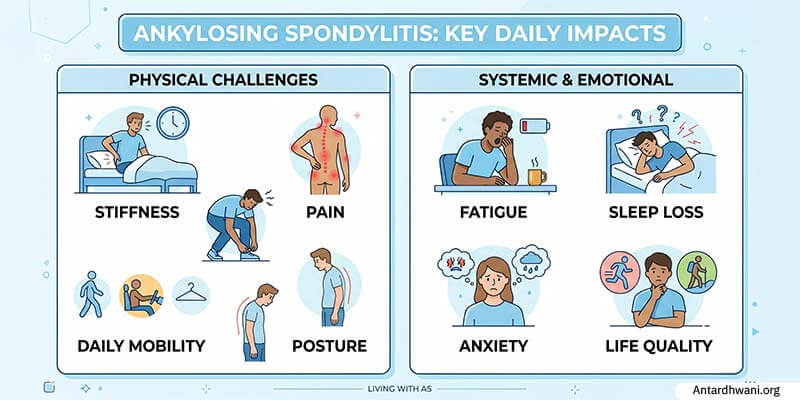
Prolonged standing, sitting, or bending can be difficult for those living with ankylosing spondylitis, as the condition primarily affects the lower back, spine, and hips. Over time, a stiffened spine can affect posture and spinal mobility, making household tasks, work, and travel challenging.
AS pain frequently disrupts sleep, leading to persistent fatigue that affects concentration and productivity. Chronic back problems can also create psychological difficulties; some individuals withdraw socially or experience anxiety due to how others perceive their condition. Recognizing these emotional effects is an important part of holistic care.
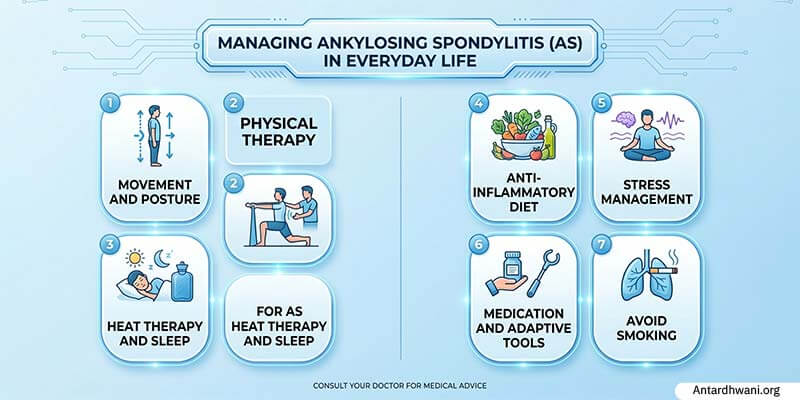
Movement and Posture
Regular movement is a cornerstone of managing spondylitis pain. Gentle stretching, posture awareness, and frequent breaks from sitting help reduce stiffness and support spinal health throughout the day.
Physical Therapy for Ankylosing Spondylitis
Structured physical therapy for ankylosing spondylitis supports flexibility and strength while protecting the spine. A physiotherapist can design an exercise program tailored to your stage of disease, improving confidence and reducing fear of movement over time.
Heat Therapy and Sleep
Warm baths or showers before exercise relax tight muscles and ease joint stiffness, which is especially helpful during morning stiffness or mild flare-ups. Pairing this with quality sleep on a firm mattress and consistent bedtime routines further supports pain control and energy levels.
Anti-Inflammatory Diet
Focus on whole foods, fresh fruits, vegetables, and omega-3-rich sources, while limiting sugar and processed items. An anti-inflammatory diet complements medical treatment and can help reduce fatigue and inflammation over time.
Stress Management
Stress can trigger flare-ups and heighten pain perception. Relaxation techniques such as deep breathing, meditation, or gentle massage are practical tools for daily stress reduction, benefiting both physical and emotional health.
Medication and Adaptive Tools
NSAIDs such as ibuprofen or naproxen are commonly used to control pain and inflammation, with DMARDs or biologics in some cases, always under a doctor’s guidance. Alongside medication, adaptive tools such as long-handled aids, supportive footwear, and orthotics can make everyday tasks easier and reduce joint strain.
Avoid Smoking
Smoking increases inflammation and can accelerate spinal damage. Quitting supports better treatment outcomes and overall disease management.
An adaptable daily schedule helps people cope with the unpredictable nature of AS symptoms. Ergonomic adjustments at work and home reduce spinal strain, while consistent sleep routines promote healing and cut down on inflammation. Staying regularly active, without overexertion, preserves independence and daily functioning.
Early recognition of symptom changes allows for timely action. Regular monitoring and avoiding misinformation are essential for long-term spine health. Understanding what causes ankylosing spondylitis, including the role of the HLA-B27 gene, immune responses, and environmental triggers, helps patients make informed decisions about their care and lifestyle adjustments.
Joining an ankylosing spondylitis support group connects individuals with shared experiences, practical advice, and emotional reassurance. Being part of a wider ankylosing spondylitis community reduces isolation and builds confidence in daily decision-making. Family, caregivers, and peer support all play a critical role in managing AS beyond its physical symptoms.
A diagnosis of AS does not mean stopping your goals. Many people adapt and continue active lives, including work, travel, and social relationships. Balancing hope with realism, self-advocacy, and future planning are all part of living with ankylosing spondylitis well.
See your doctor if you notice growing fatigue, a noticeable reduction in mobility, or increasing pain. Early intervention leads to better long-term outcomes for spinal conditions.
Living with ankylosing spondylitis involves commitment to ongoing care, but it doesn’t have to limit you. With a strong understanding of the condition and the right support, people with AS can lead full and meaningful lives. Connecting with groups like Antardhwani and the wider ankylosing spondylitis community provides the help, hope, and solidarity that makes that journey easier.


Living with AS or RA in India? This guide covers daily symptom management, real treatment costs, insurance gaps, mental health,…

Is ankylosing spondylitis really autoimmune? Unlike RA, it has no autoantibodies. Here's the real overlap - and why the difference…
Autoimmune diseases are rising sharply among young Indians. Discover the key causes lifestyle changes, stress, diet, and pollution and learn…