
Understanding the causes of Ankylosing Spondylitis supports early symptom recognition and informed decisions about treatment and lifestyle care.
The exact cause of Ankylosing Spondylitis remains unknown, but research points to a combination of genetic, immune, and environmental factors. Unlike illnesses caused by a single germ or injury, AS develops through a complex interplay of factors that increase inflammation and affect the spine.
Over time, persistent inflammation can lead to:
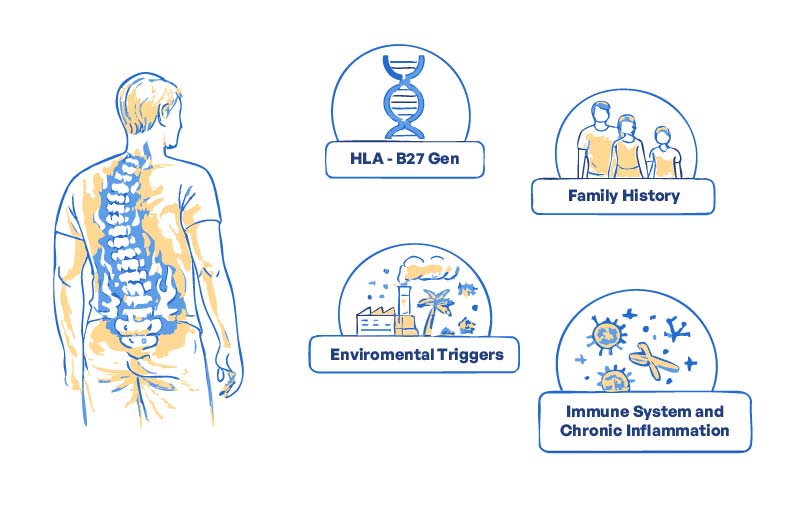
Some people are more likely to develop Ankylosing Spondylitis due to genetic and biological factors, making early awareness important.

Genetic predisposition increases the likelihood of developing AS.

AS commonly begins earlier than other arthritis types.

Biological sex affects disease presentation.

Risk varies across populations.

Immune-related conditions increase risk.

Triggers may influence disease onset or severity.
Ankylosing spondylitis develops from a mix of genetic and immune factors that influence how symptoms begin and evolve. Because onset is often gradual, early recognition is key to timely diagnosis and better outcomes.
Ankylosing spondylitis is a long-term inflammatory condition that progresses differently in each individual. Understanding how the disease may evolve over time helps patients stay proactive, adapt treatment plans, and maintain long-term function and quality of life.
Identifying AS early before permanent joint damage occurs allows for:


Many people living with Ankylosing Spondylitis delay medical consultation because early symptoms often resemble common back pain or muscle stiffness. However, early medical evaluation is critical to prevent long-term complications and preserve mobility.
You should consider seeing a doctor preferably a rheumatologist if you experience any of the following signs:
What’s new in our journey against arthritis and spondylitis.