
What Is Arthritis?

Learn how arthritis affects the body—and discover treatment and movement options that support a better quality of life.

Find Support & Treatment Options
What is Arthritis? Types of Arthritis Causes & Risk Factors Symptoms of Arthritis

Living With Arthritis? You’re Not Alone

Arthritis is an umbrella used to describe a group of conditions that primarily affect the joints, leading to inflammation, pain, stiffness, and reduced mobility. Rather than being a single disease, arthritis includes more than 100 different disorders that vary in cause, severity, and progression. Some forms develop due to gradual wear and tear on the joints, while others occur when the immune system mistakenly attacks healthy joint tissues.

Arthritis can affect people of all ages, including children and young adults, and may involve one joint or multiple joints throughout the body. Over time, untreated or poorly managed arthritis can interfere with daily activities such as walking, writing, working, and even sleeping. Early awareness, accurate diagnosis, and personalized management play a crucial role in maintaining joint health and long-term quality of life.
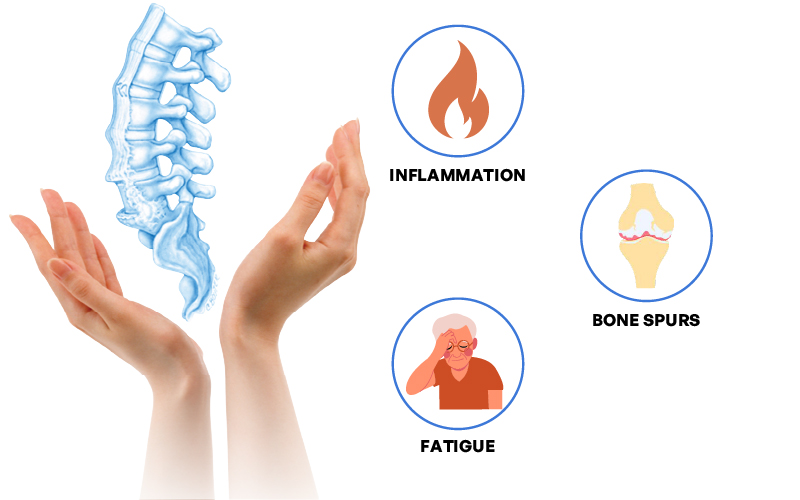
What Is Arthritis

Types of Arthritis

Each type affects the joints differently, with unique causes, symptoms, and treatment approaches.

Osteoarthritis (OA)

Osteoarthritis (OA)

  • Cartilage wear and tear
  • Age-related joint degeneration
  • Common in knees, hips
  • Activity-related pain
Rheumatoid Arthritis (RA)

Rheumatoid Arthritis (RA)

  • Autoimmune joint inflammation
  • Symmetrical joint involvement
  • Morning stiffness common
  • Progressive joint damage
Ankylosing Spondylitis (AS)

Ankylosing Spondylitis (AS)

  • Spine-focused inflammation
  • Lower back stiffness
  • Improves with movement
  • Postural changes over time
Psoriatic Arthritis (PsA)

Psoriatic Arthritis (PsA)

  • Linked with psoriasis
  • Joint and skin involvement
  • Nail changes common
  • Flare-based symptoms
Reactive Arthritis

Reactive Arthritis

  • Triggered by infection
  • Affects joints, eyes
  • Develops weeks later
  • Often temporary course
Enteropathic Arthritis

Enteropathic Arthritis

  • Associated with IBD
  • Gut-joint connection
  • Fluctuates with flares
  • Peripheral or spinal pain
Gout

Gout

  • Uric acid crystals
  • Sudden severe pain
  • Often affects big toe
  • Diet-related triggers
Juvenile Idiopathic Arthritis (JIA)

Juvenile Idiopathic Arthritis (JIA)

  • Childhood-onset arthritis
  • Persistent joint inflammation
  • Growth impact possible
  • Early treatment essential
Lupus-Related Arthritis

Lupus-Related Arthritis

  • Autoimmune systemic disease
  • Migratory joint pain
  • Less joint damage
  • Fatigue common
Septic Arthritis

Septic Arthritis

  • Joint infection present
  • Rapid symptom onset
  • Severe pain and swelling
  • Medical emergency

Causes and Risk Factors of Arthritis

Understanding what contributes to arthritis can help with early prevention, timely diagnosis, and better long-term joint care.

Key Causes

  • Cartilage wear with age
  • Autoimmune-driven inflammation
  • Post-infection joint response
  • Uric acid crystal buildup
  • Injury or repetitive strain

Risk Factors

  • Aging and joint wear
  • Family history
  • Excess body weight
  • Smoking, low activity
  • Repetitive work stress

Symptoms of Arthritis

Symptoms can range from mild discomfort to severe disability and may fluctuate over time depending on the type and severity of arthritis.

How Is Arthritis Diagnosed?

Diagnosing arthritis involves a comprehensive evaluation to identify the specific type and severity of the condition.

  • Review of medical history and symptom patterns
  • Physical examination assessing joint swelling, tenderness, and mobility
  • Blood tests to detect inflammation markers or autoimmune antibodies
  • Imaging studies such as X-rays, MRI, or ultrasound to assess joint damage
  • Joint fluid analysis in suspected infections or crystal-related arthritis
How Is Arthritis Diagnosed

Living and Managing Arthritis

Living with arthritis is about more than managing pain, it’s about building daily habits that protect your joints, support mobility, and improve overall well-being. With the right combination of medical care, movement, and lifestyle choices, many people with arthritis lead active and fulfilling lives.

  • Stay Physically Active
    Gentle, guided movement helps reduce stiffness and maintain joint flexibility
  • Protect Your Joints
    Use proper posture, supportive tools, and joint-friendly techniques
  • Manage Weight and Nutrition
    Balanced nutrition and healthy weight reduce stress on joints
  • Pace Daily Activities
    Balance activity and rest to avoid flare-ups
  • Support Mental Well-being
    Managing stress and emotional health improves symptom control
  • Follow a Care Plan
    Regular check-ups and treatment adherence support long-term joint health

Frequently Asked Questions (FAQ) on Arthritis

Is arthritis a lifelong condition?

+
Many forms of arthritis are chronic, but with proper treatment and lifestyle management, symptoms can be effectively controlled.

Can arthritis be prevented?

+
While not all types can be prevented, maintaining a healthy weight, staying active, and addressing early symptoms can reduce risk and severity.

Does arthritis only affect older adults?

+
No. Autoimmune and inflammatory arthritis can affect children, young adults, and middle-aged individuals.

Can arthritis lead to disability?

+
If untreated, some forms of arthritis may cause joint damage and functional limitations. Early care significantly reduces this risk.

Is movement safe for arthritis patients?

+
Yes. Guided, low-impact movement is one of the most effective ways to reduce stiffness and maintain joint health.
Dark Blue Arrow
Join Now Insights Patient Stories