
Symptoms of Rheumatoid arthritis

Learn the early, common, and advanced symptoms of RA to support early diagnosis and timely treatment.

Join Our Community  →

Symptoms of Rheumatoid arthritis
RA Symptoms Key Symptoms of RA Manage RA symptoms Diagnosis of RA

Overview of Rheumatoid Arthritis Symptoms

Rheumatoid Arthritis is a chronic autoimmune condition that primarily affects the joints but can also impact overall health. Symptoms often develop gradually and may vary from person to person. Early signs can be subtle, while advanced stages may lead to joint damage and reduced mobility. Recognizing symptoms early plays a crucial role in managing the condition effectively and preventing long-term complications
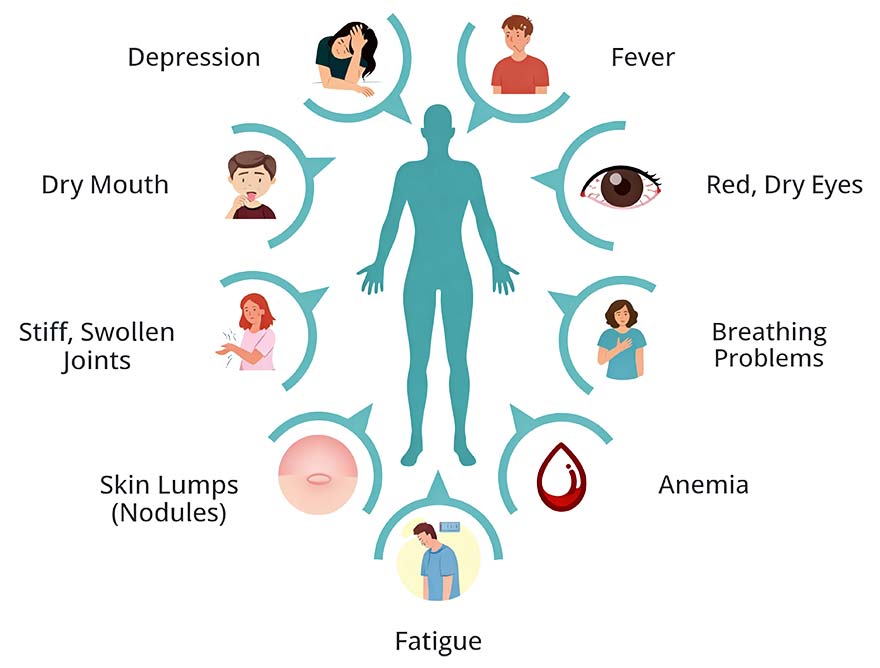
Overview of Rheumatoid Arthritis Symptoms

Key Symptoms of Rheumatoid Arthritis to Watch For

Understanding symptom progression can support earlier diagnosis and better disease management.

How to manage RA symptoms

Practical strategies to reduce pain, improve mobility, and enhance daily quality of life

  • Follow prescribed treatment and medications
  • Practice low-impact exercise for joint mobility
  • Maintain an anti-inflammatory, balanced diet
  • Manage stress to reduce flare-ups
  • Use ergonomic aids for daily comfort
  • Monitor symptoms and seek timely care

Diagnosis of Rheumatoid Arthritis Symptoms

How doctors identify RA based on symptoms, tests, and clinical evaluation

Diagnosing Rheumatoid Arthritis symptoms involves a detailed assessment of joint-related complaints along with medical history and diagnostic testing. Early and accurate diagnosis is essential to prevent long-term joint damage and manage symptoms effectively.


  • Review joint pain, swelling, stiffness
  • Assess medical and family history
  • Examine joints for tenderness, movement
  • Run blood tests for inflammation
  • Use imaging to detect joint changes
  • Track symptom duration and patterns
Diagnosis of Rheumatoid Arthritis Symptoms
When to See a Doctor

When to See a Doctor

Knowing when medical evaluation is necessary

Early medical attention can help slow disease progression and protect joint health. You should consider seeing a doctor if symptoms persist or worsen.

  • Symptoms lasting longer than a few weeks
  • Morning stiffness lasting more than one hour
  • Increasing joint pain or swelling
  • Family history of Rheumatoid Arthritis or autoimmune conditions

FAQs on Rheumatoid Arthritis Symptoms

What are the first symptoms of RA?

+
Early symptoms often include joint stiffness, swelling in small joints, and persistent fatigue.

Do RA symptoms come and go?

+
Yes, RA symptoms can fluctuate, with periods of flare-ups and remission.

Can RA symptoms affect organs other than joints?

+
In some cases, RA can affect the lungs, heart, eyes, and other organs.

How are RA symptoms different from osteoarthritis?

+
RA is an autoimmune condition causing symmetrical joint inflammation, while osteoarthritis results from wear and tear and usually affects joints unevenly.

Is Rheumatoid Arthritis genetic?

+
RA can run in families, but genetics alone do not cause the condition. Environmental and lifestyle factors also play a role.

What are the stages of Rheumatoid Arthritis?

+
RA typically progresses from early inflammation to moderate joint damage and, in severe cases, permanent joint deformity if untreated.
Dark Blue Arrow
Join Now Insights Patient Stories