
Juvenile Spondyloarthritis can affect a child’s movement and daily activities. Understanding symptoms and treatment helps manage it better.
Joint Our Support Community
Juvenile-onset spondyloarthritis (JSpA), also known as Juvenile Spondyloarthropathy, is the medical term for a group of childhood rheumatic diseases that cause arthritis before the age of 16 and may continue into adult life. These conditions include undifferentiated spondyloarthropathy, juvenile ankylosing spondylitis, psoriatic arthritis, reactive arthritis, and spondylitis associated with inflammatory bowel disease. In many cases, ankylosing spondylitis in children presents with similar patterns of inflammation seen in adults but may initially appear as pain in the lower body.
JSpA typically causes pain and inflammation in the joints in the lower part of the body, for example, the pelvis, hips, knees and ankles. Other areas of the body can also be affected, such as the spine, eyes, skin and bowels. Fatigue and lethargy can also occur.

Juvenile Spondyloarthritis occurs when genetic susceptibility combines with immune and environmental triggers, leading to chronic joint inflammation.
Recognize early signs of JSpA to manage pain, inflammation, and maintain your child’s mobility.

Children may experience pain, tenderness, and swelling, primarily in the hips, knees, ankles, and feet. Pain often worsens with activity and can affect mobility.

One distinctive feature of JSpA is pain where tendons and ligaments attach to bones, such as the heels, knees, or pelvis. This can cause limping or difficulty walking.

Morning stiffness or stiffness after periods of rest is common. Movement and gentle exercises usually help relieve it.

As the disease progresses, inflammation may involve the spine and sacroiliac joints, causing lower back or buttock discomfort.

Chronic inflammation may lead to limited flexibility or difficulty moving certain joints fully.

Persistent tiredness or low energy levels can affect a child’s daily activities and school performance.

Some children may develop uveitis, characterized by eye redness, pain, light sensitivity, or blurred vision, which requires immediate medical attention.

Due to joint pain, swelling, or enthesitis, children may limp or show altered gait patterns.

Symptoms can come and go, with periods of flare-ups and relative relief, making early monitoring essential.
Effective treatment can help manage pain, reduce inflammation, and support your child’s growth and mobility.

These medications help reduce joint pain, swelling, and stiffness, especially during flare-ups.

Customized exercise routines improve flexibility, strengthen muscles around affected joints, and support proper posture and mobility.

Medications like methotrexate or sulfasalazine help control inflammation in peripheral joints and slow disease progression.

For moderate to severe cases, biologics target specific immune pathways to reduce systemic inflammation and prevent joint damage.

Corticosteroid injections may be used for targeted relief in severely affected joints, offering temporary pain reduction and improved mobility.

Children with uveitis require regular monitoring and treatment to prevent vision complications.

Maintaining regular activity, adequate rest, and proper nutrition can complement medical treatment. Support from family, school, and therapy programs is crucial for emotional and physical well-being.
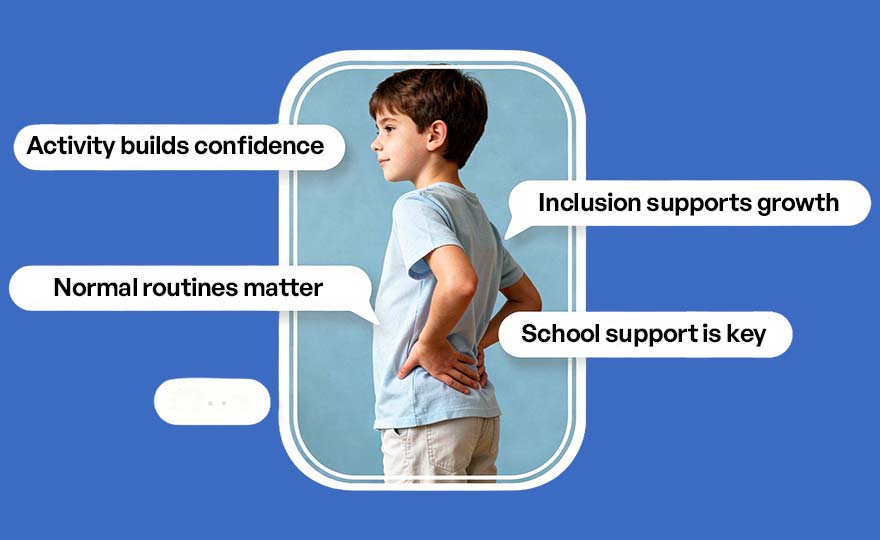
Even in its mild forms, JSpA can affect your child’s normal daily routines. It’s important to keep his/her daily life as normal as possible to prevent any undue emotional stress.
Together with your child’s doctor, inform your child’s teachers and school of his/her condition, and make them aware of any special needs he/she might have such as seating and the need to stretch.
Whenever possible, your child should participate in gym and other physical activities. Remaining active will help your child stay involved with her peers and lead a normal life. Before returning to a physical activity, make his/her teachers and coaches aware of any limitations he/she may have. Low impact sports are more favorable than sports that produce high joint stress. However, it is not always necessary to remove your child from high impact sports. The potential damage from the sport is much less than the psychological impact that a lack of involvement can have on your child.
Since the school years greatly influence a child’s emotional development, it is critical that a child with a chronic disease be treated and made to feel equal to unaffected children because this can contribute toward his or her ability to cope with the arthritis.
Diagnosing JSpA can be challenging because symptoms may be intermittent and resemble other conditions. A thorough evaluation by a pediatric rheumatologist is essential and typically involves:

Review of symptoms, family history, and examination of joints, spine, and entheses.

Blood tests look for inflammatory markers and may include HLA B27 testing (though this alone isn’t definitive).

X rays, ultrasound or MRI may help assess joint and sacroiliac involvement, although changes may not always be visible early.