
Featured Penelists

Dr. Aadhar Dhooria
Rheumatologist

Dr. Bhupendra Vaishnav
Rheumatologist

Dr. Renu Segal
Rheumatologist

Dr. Avinash Jain
Rheumatologist

Dr. Deepak Rajpurohit
Physiotherapist
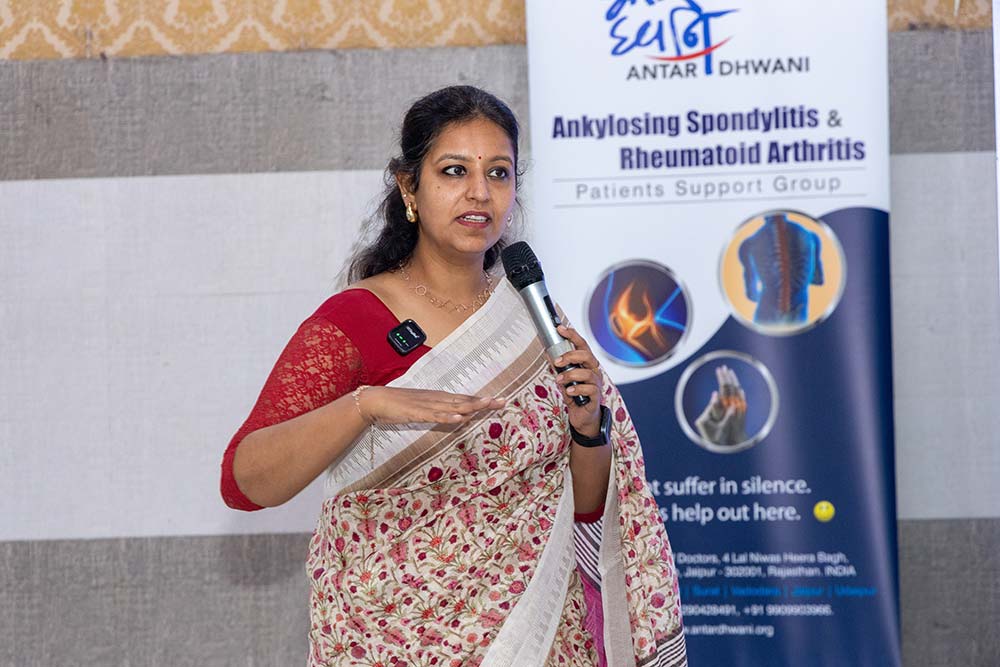
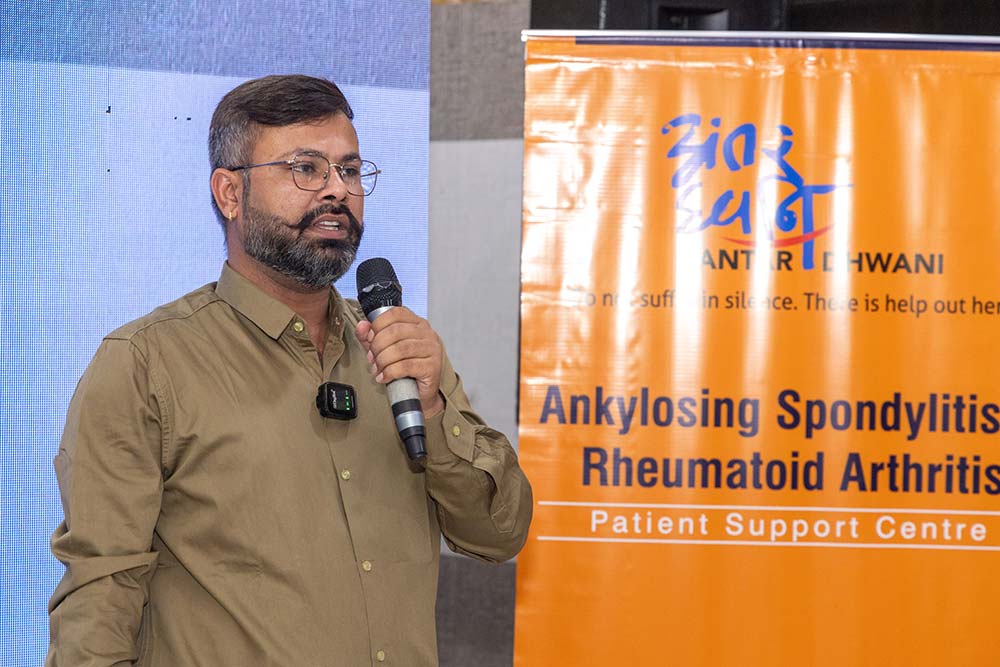
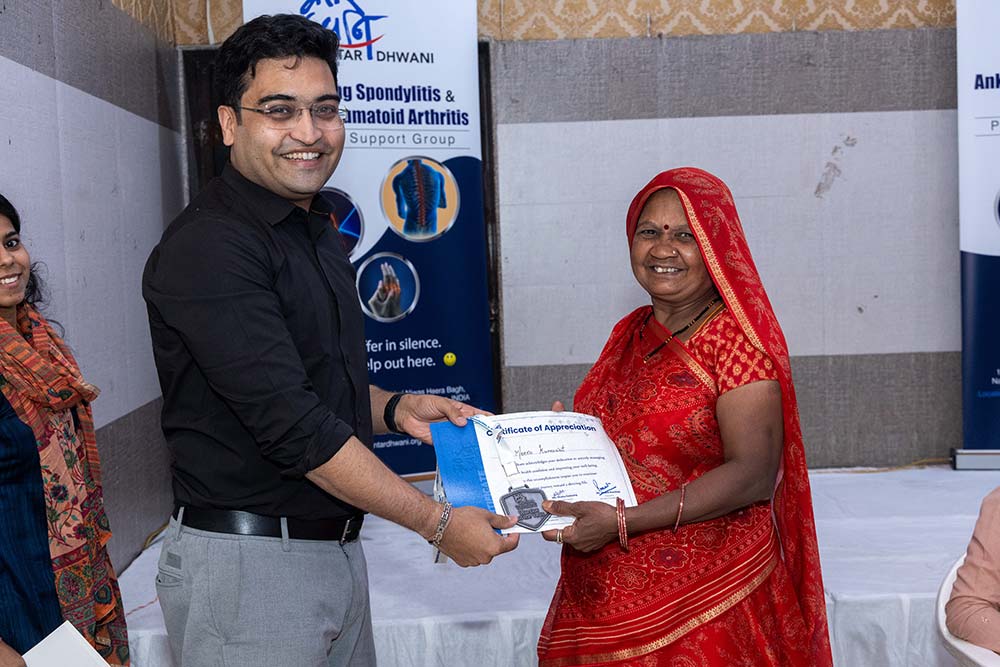
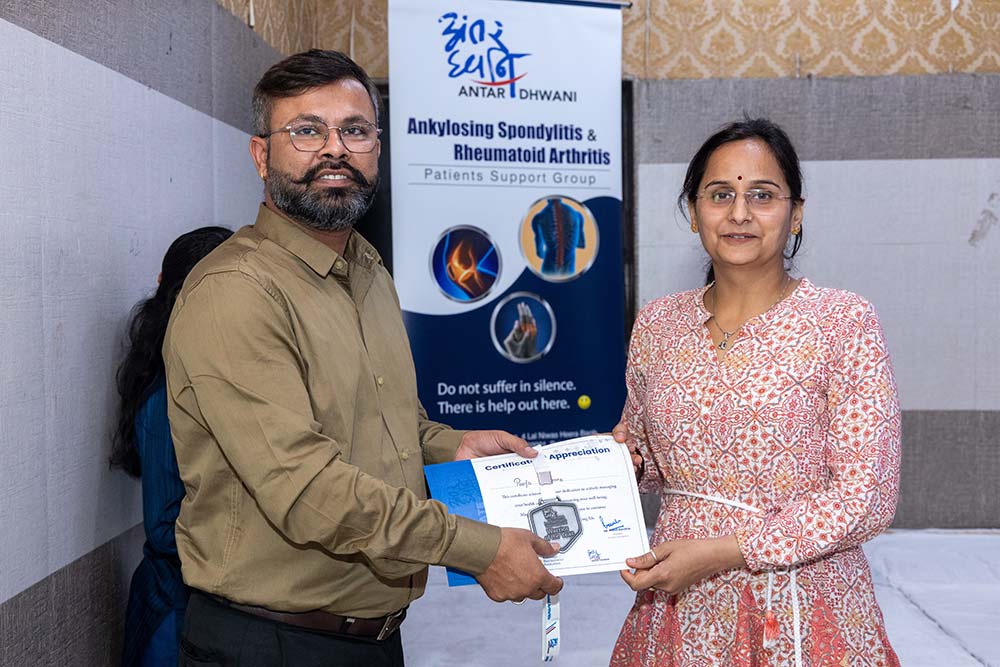
Acceptance and Management of Disease in Rheumatoid Arthritis and Ankylosing Spondylitis is a patient-focused session designed to support individuals in understanding, accepting, and effectively managing life with RA and AS. The event brings together expert healthcare professionals who share practical insights on disease management, treatment adherence, lifestyle adjustments, and emotional well-being. Through guided discussions and interactive engagement, the session encourages patients to move beyond fear and uncertainty, empowering them with knowledge, confidence, and strategies to improve their quality of life while living with chronic conditions.





















Rheumatoid Arthritis (RA) and osteoarthritis (OA) are different types of joint diseases with distinct causes and characteristics. RA is an autoimmune condition, where the immune system attacks the joint lining, leading to inflammation, pain, swelling, and potential joint deformity. It often affects smaller joints like the hands and wrists symmetrically and can involve other organs.
Osteoarthritis, on the other hand, is a degenerative joint disease caused by wear and tear of cartilage over time. It usually affects weight-bearing joints such as the knees, hips, or spine, and is more common with aging. OA causes pain, stiffness, and reduced mobility but typically does not involve systemic inflammation or other organs. In short, RA is inflammatory and autoimmune, while OA is mechanical and degenerative.
DMARDs (Disease-Modifying Anti-Rheumatic Drugs) are a class of medications used to slow the progression of Rheumatoid Arthritis (RA) rather than just relieve symptoms. Unlike painkillers or anti-inflammatory drugs, DMARDs target the underlying immune system dysfunction that causes joint inflammation and damage.
Common DMARDs include methotrexate, sulfasalazine, and hydroxychloroquine, and they are often considered the first-line treatment for RA. By reducing inflammation and preventing joint erosion and deformity, DMARDs help patients maintain mobility, function, and long-term quality of life. These medications are often combined with lifestyle measures and other therapies for optimal disease control.
Biologic drugs are recommended for Rheumatoid Arthritis (RA) when conventional treatments, such as traditional DMARDs, are not sufficient to control disease activity. Biologics are targeted therapies that block specific molecules or immune pathways responsible for inflammation, such as TNF-alpha, IL-6, or B-cell activity.
They are typically prescribed for patients with moderate to severe RA, especially those who continue to experience joint pain, swelling, or progressive damage despite standard DMARD therapy. Biologics can help reduce inflammation, prevent joint destruction, improve physical function, and enhance quality of life. Because these medications can affect the immune system, they require close monitoring for infections and other potential side effects.