
Best Exercises for Ankylosing Spondylitis

Yoga can be a great way to maintain flexibility and reduce pain and stiffness from AS.

Join Our Support Group

Best Exercises for Ankylosing Spondylitis

Yoga for Ankylosing Spondylitis: Best Poses to Reduce Stiffness & Pain

Yoga plays an important supportive role in managing Ankylosing Spondylitis by improving spinal flexibility, posture, breathing, and overall mobility. Because AS primarily affects the spine and surrounding joints, gentle, targeted yoga poses can help reduce stiffness, ease pain, and maintain an upright posture over time. When practiced regularly and under proper guidance, yoga supports joint health, muscle strength, and mental well-being, making it a valuable complement to medical treatment and physical therapy for people living with AS.

Below are some important yoga poses and exercises commonly recommended for people with Ankylosing Spondylitis:
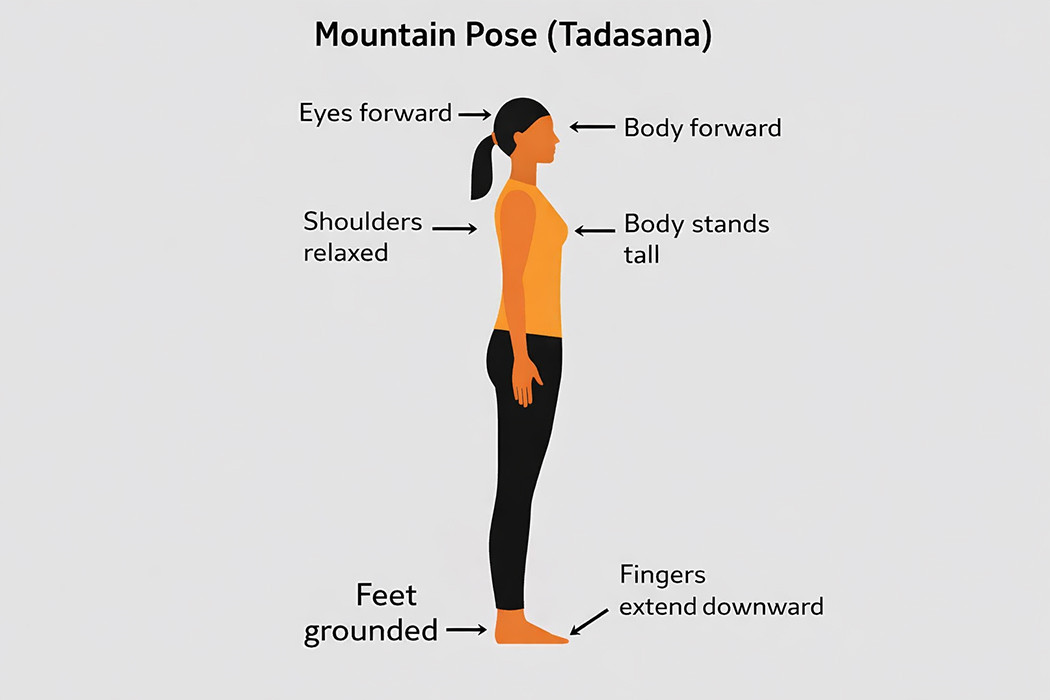
Mountain Pose (Tadasana)

Mountain Pose (Tadasana)

The mountain pose or TADASANA is a simple stretching exercise helpful for the patient.
  • Stand upright with your body straight.
  • Join the thumb of the toes but putting your heels a little apart.
  • Try to bring the energy of the whole body from the toes and let it travel from the whole body up to thehead. In a way, you are stretching your inner body without moving the outer one.
  • Lift your body from the heels putting the weight on the toes and stretch the whole body upwards.
  • Breathe during the asana and put your body in a straight line.
  • Release the asana and stand in a relax position.
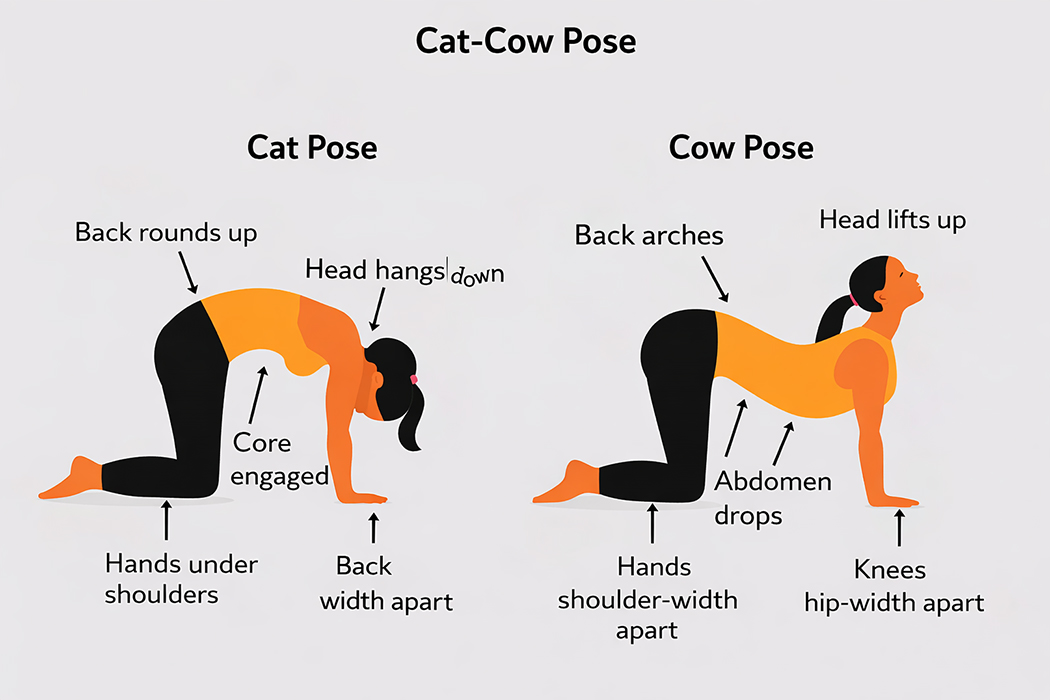
Cat-Cow Pose

Cat-Cow Pose

The cat pose, MARJARYASANA strengthens and elongates your spine and neck.
  • Stand on your hands and knees, resembling a table. Keep your back straight.
  • Now bending your back downward raise your head back as much as you can. Inhale the breath, hold.
  • In the next pose move your back upwards and move your head downwards so that you can look at your navel. Exhale your breath, hold.
  • Repeat the steps to make your spine flexible.
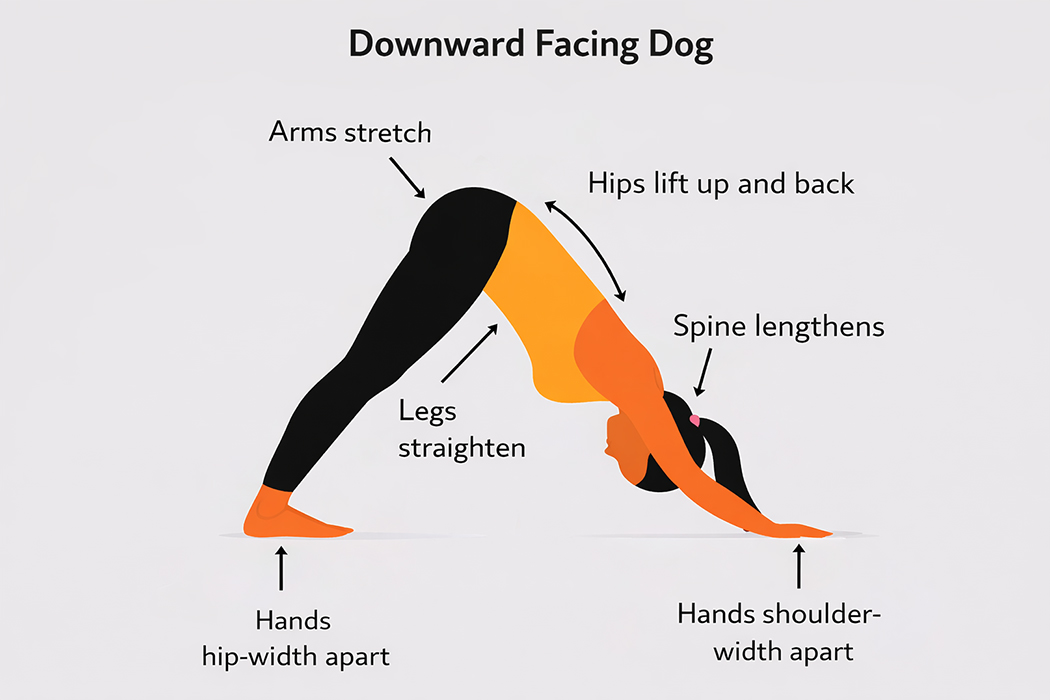
Downward Facing Dog

Downward Facing Dog

Downward facing dog, ADHO MUKHA SVANASANA stretches your back and gives flexibility in the body.
  • Stand on hands and feet, such that the body forms a table-like structure.
  • Exhale and gently lift your hips and straighten your elbows and knees.
  • Your hands should be in line with your shoulders, and your feet in line with your hips. Make sure that your toes point outwards.
  • Press your hands on the ground and stretch your neck. Your ears should touch your inner arms, and your gaze should be at the navel.
  • Hold for a few seconds, and then, bend your knees and return to the table position.
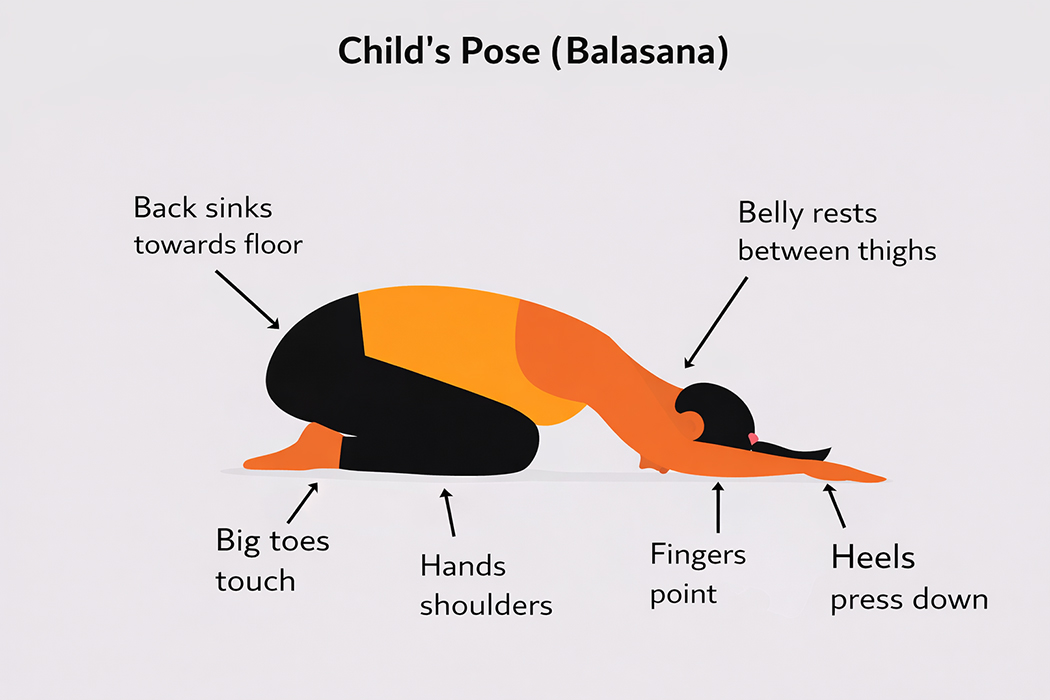
Child’s Pose (Balasana)

Child’s Pose (Balasana)

The child’s pose, also known as BALASANA. It gently relaxes the muscles of the lower back by stretching the muscles passively. It also restores the balance and the equanimity of the body.
  • Kneel down on the mat keeping your knees apart from each other, for about 6-8 inches.
  • Now lower your chest on your thighs and forehead touching the ground.
  • You can place the hands either in the front facing down or simply slide the hands back facing upwards.
  • Breath deep while in the pose. Rise and rest.
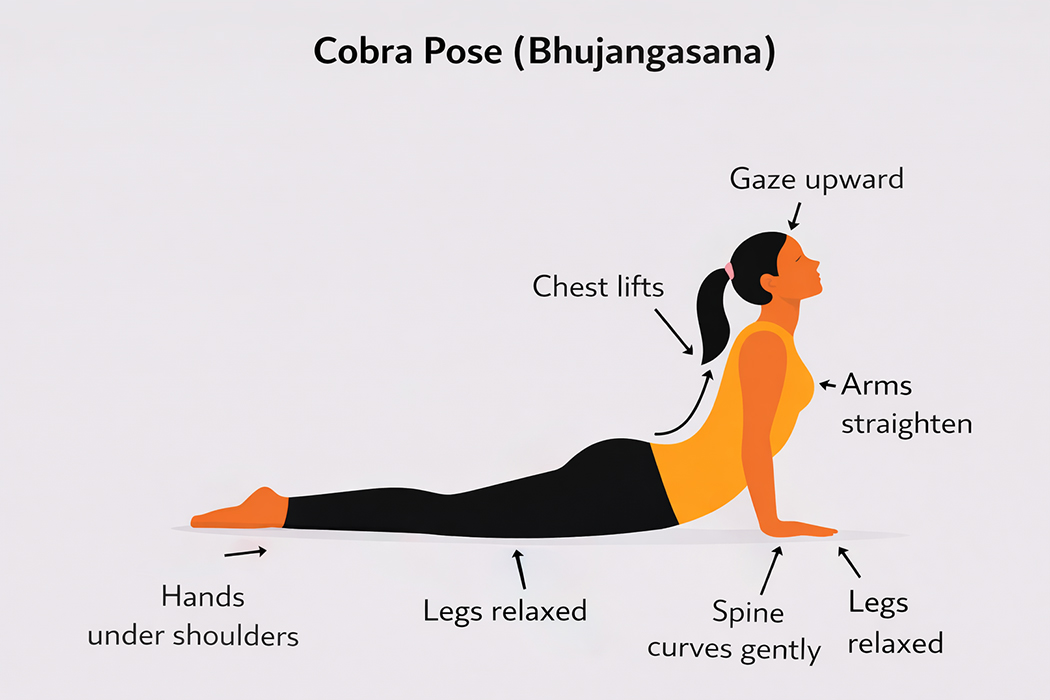
Cobra Pose (Bhujangasana)

Cobra Pose (Bhujangasana)

The snake (cobra) pose, also called BHUJANGASANA stretches your back, lungs, and chest.
  • Lie on your stomach and place your forehead on the floor.
  • Keep your feet together or hip-width apart.
  • Place your hands underneath your shoulders; keep your elbows close to your body.
  • Inhale and start lifting your head and chest off the floor, and don’t place all of your weight on your hands. Keep the elbows slightly bent and kept the back muscles straight.
  • Keep your shoulders relaxed.
  • Exhale and lower yourself back to the ground.
  • Repeat the procedure two to three times.
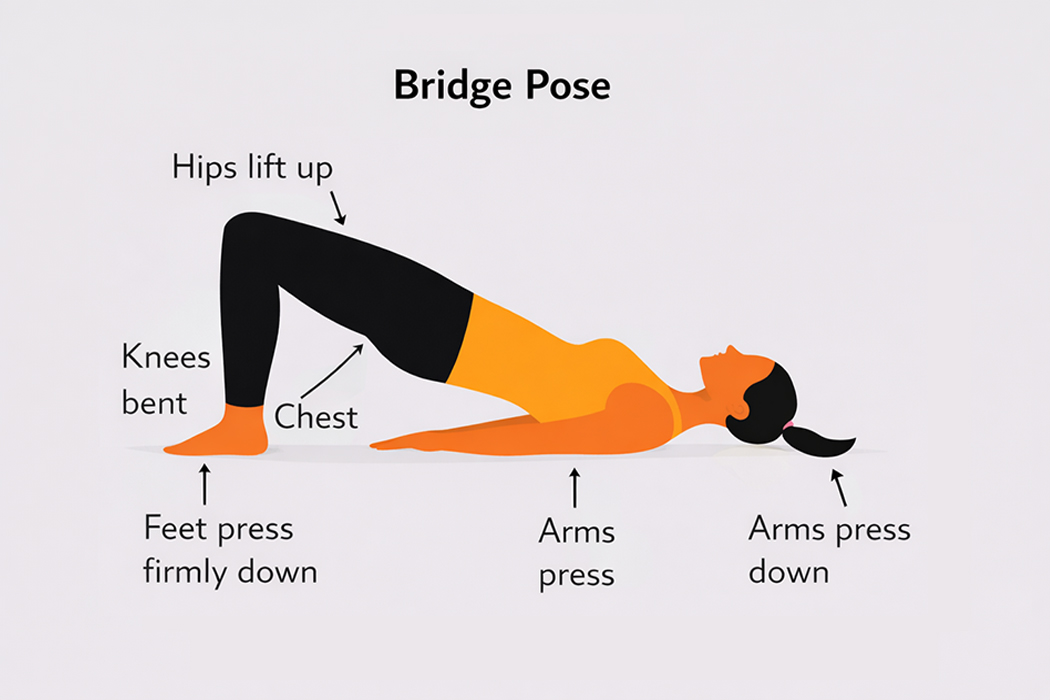
Bridge Pose

Bridge Pose

The bridge pose, also known as SETU BAND ASANA stretches the spine, neck, and chest. It also strengthens the back muscles.
  • To begin, lie on your back.
  • Fold your knees and keep your feet at a little distance on the floor, with knees and ankles in a straight line.
  • Keep your arms beside your body, palms facing downwards.
  • Inhale and slowly lift your lower back, then middle back and then upper back from the floor; touch the chest with the chin without bringing the chin down. Your bottom should be firm up.
  • Both the thighs are parallel to each other and the floor.
  • Keep breathing easily.
  • Hold the posture for a minute or two and exhale as you gently release the pose.
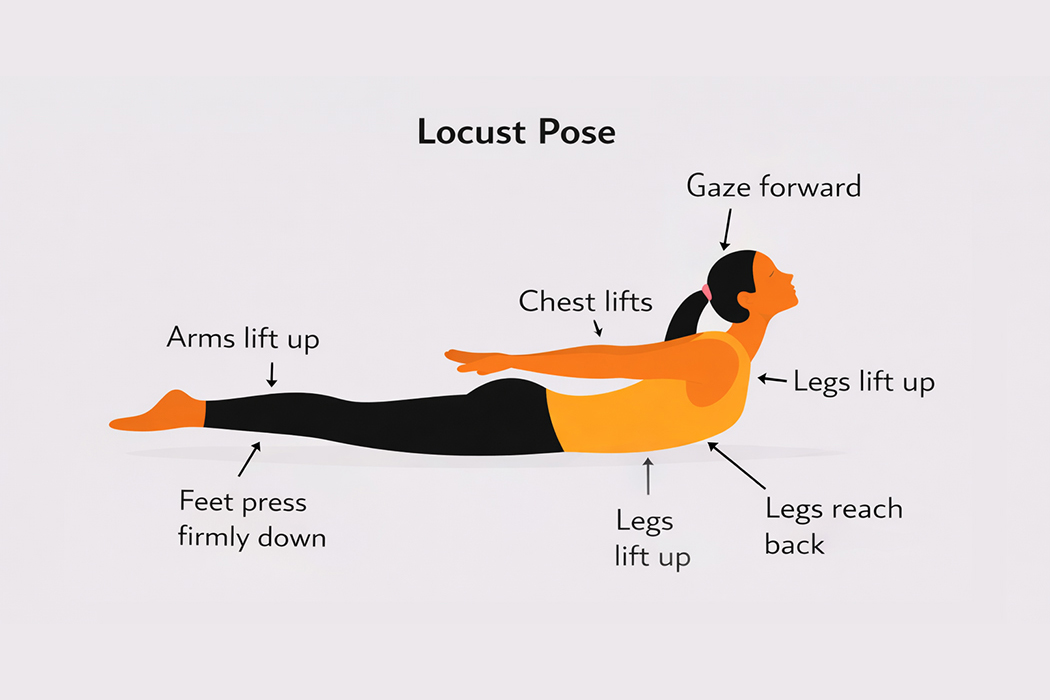
Locust Pose

Locust Pose

The locust pose, also called SALABHASANA strengthens lower back muscles.
  • Lie on your belly with your legs straight. Place your arms by your sides with palms up, let your chin gently rest on the floor.
  • Inhale and raise your head to look forward. Exhale, and lift your chest and arms. Keep your arms by the side of your body with your palms facing down.
  • Lift your upper spine and reach your arms back toward your feet.
  • Use your inner thighs to lift your legs up toward the ceiling. Your weight should rest on your lower ribs and belly.
  • Keep your breath smooth and even.
  • Hold up to one minute. Exhale, and release your body to the ground. Repeat the process.
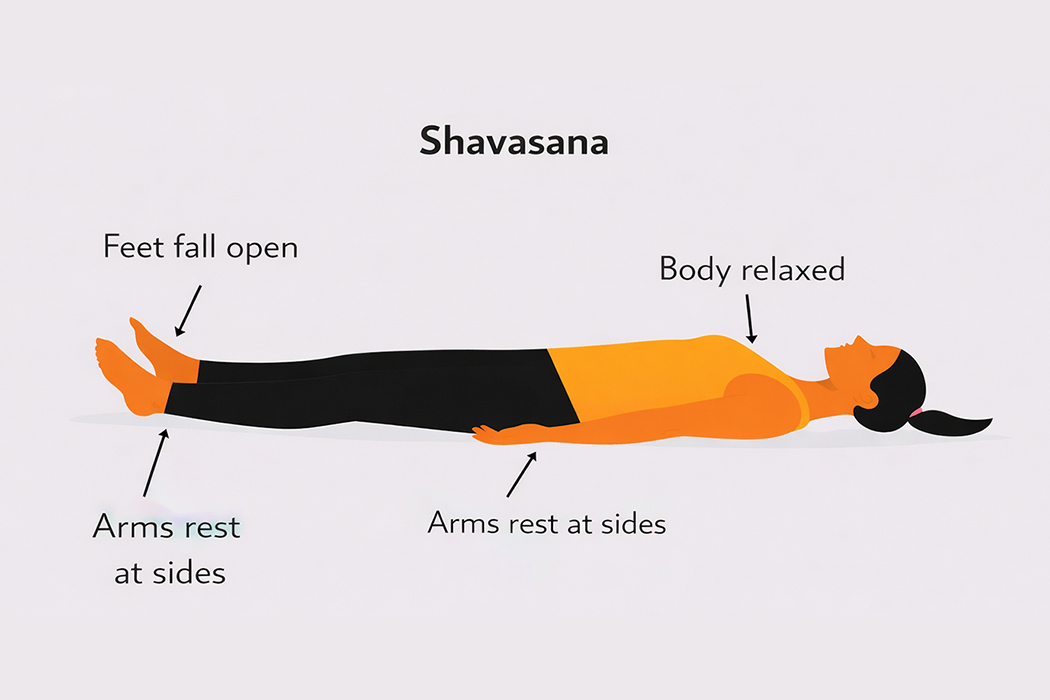
Shavasana

Shavasana

Shavasana, also known as the corpse pose, promotes deep relaxation and helps calm the nervous system. It allows the body to absorb the benefits of previous poses and reduces stress, which can help ease pain and stiffness in Ankylosing Spondylitis.
  • Lie flat on your back with your legs comfortably apart.
  • Place your arms slightly away from your body, palms facing upward.
  • Close your eyes and allow your entire body to relax.
  • Focus on slow, deep breathing and release tension from the spine and joints.
  • Remain in this position for 5–10 minutes or as long as comfortable.
Sphinx Pose

Sphinx Pose

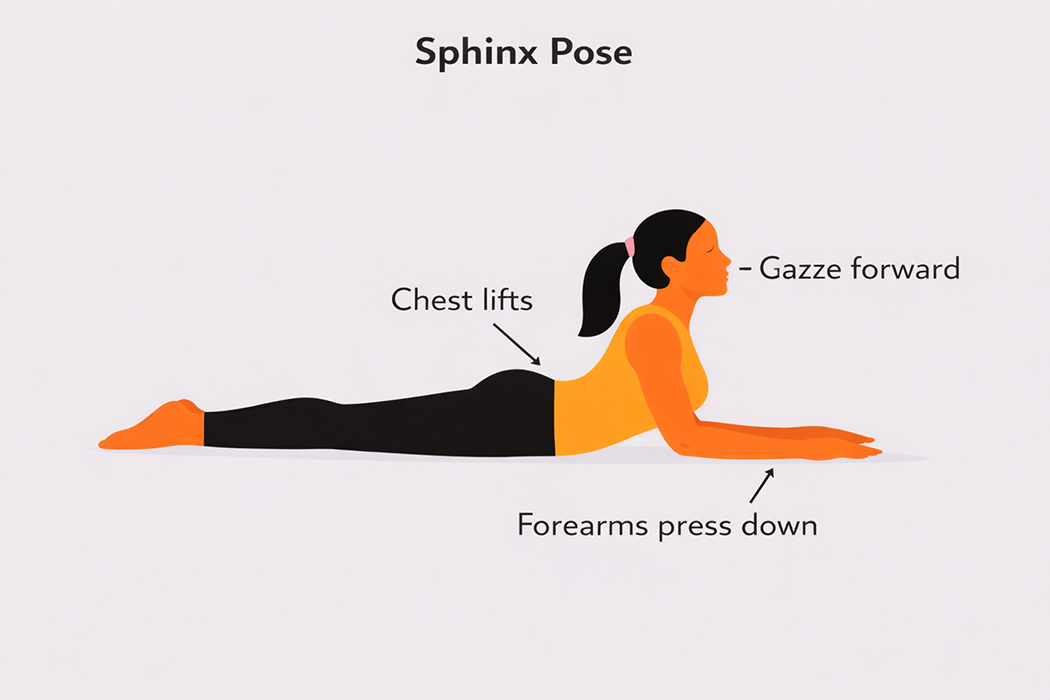
The sphinx pose gently stretches the spine and opens the chest without placing excessive pressure on the lower back. It is especially beneficial for improving posture and spinal mobility in people with Ankylosing Spondylitis.
  • Lie on your stomach with your legs extended behind you.
  • Place your forearms on the floor, elbows directly under your shoulders.
  • Press your forearms gently into the mat and lift your chest upward.
  • Keep your neck long and shoulders relaxed away from the ears.
  • Breathe normally and hold the pose for 20–30 seconds before releasing.
Chest Opening Stretch

Chest Opening Stretch

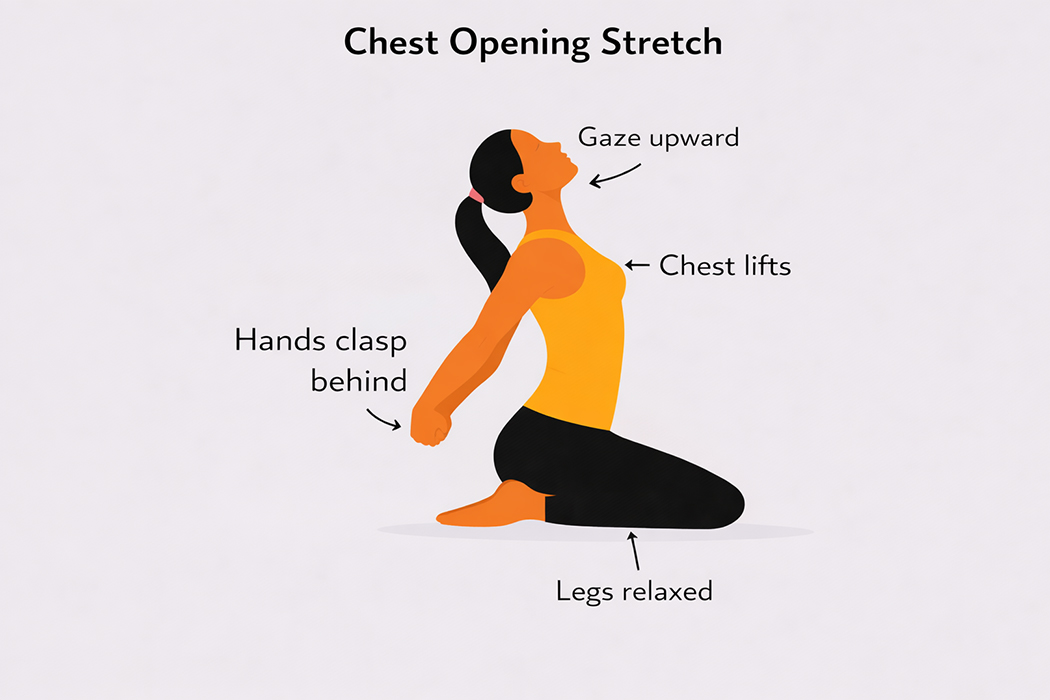
Chest opening stretches help counteract forward stooping and rounded shoulders, a common concern in Ankylosing Spondylitis. This stretch improves breathing capacity and supports an upright posture.
  • Stand or sit upright with your spine straight.
  • Gently pull your shoulders back and interlace your fingers behind your back.
  • Straighten your arms and lift your hands slightly while opening your chest.
  • Keep your chin level and breathe deeply.
  • Hold for 20–30 seconds, then slowly release.
Gentle hip openers

Gentle hip openers

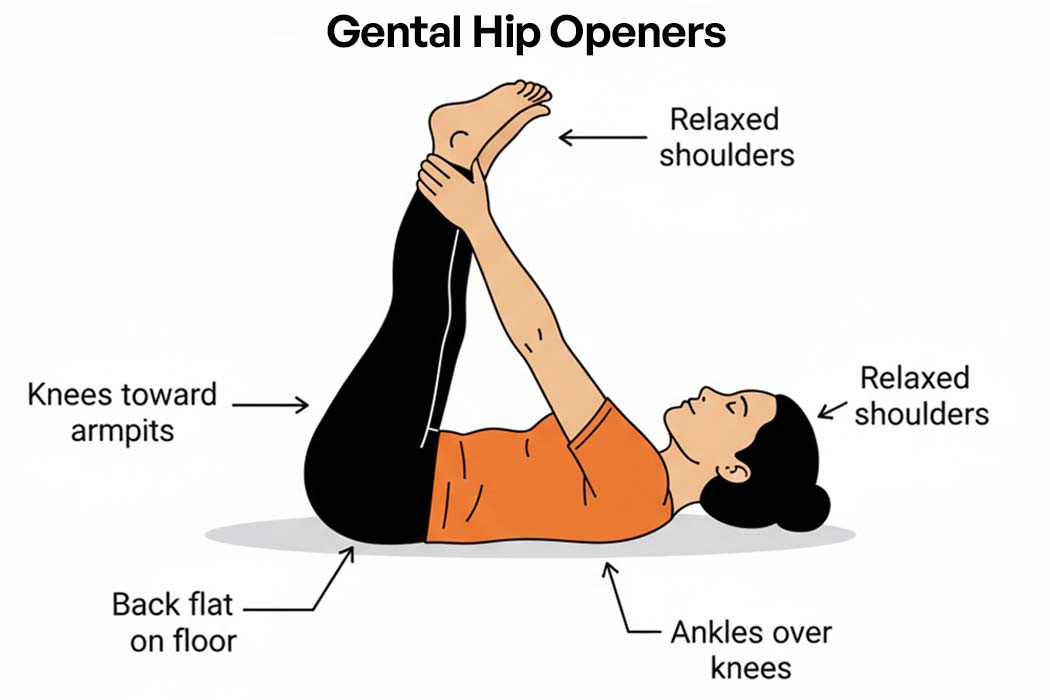
Gentle hip-opening exercises help reduce stiffness in the hips and lower back, areas often affected in Ankylosing Spondylitis. These movements support better mobility and ease daily activities like walking and sitting.

  • Sit or lie down in a comfortable position on the mat.
  • Slowly bring one knee toward your chest while keeping the other leg relaxed.
  • Gently rotate or open the bent knee outward without forcing the movement.
  • Maintain steady breathing and avoid any sharp discomfort.
  • Hold each side for 20–30 seconds and repeat as needed.
Dark Blue Arrow
Join Now Insights Patient Stories