
Spondylitis represents a collection of persistent inflammatory diseases which primarily impact the spinal column and its associated joint structures. The medical term spondylitis originates from “spondylo” which means spine and “itis” which means inflammation and “ankylosis” which describes bone fusion or loss of joint flexibility.
The medical term Spondyloarthritis (SpA) unites all conditions which belong to this group. The immune system triggers these chronic diseases to produce long-term inflammation at bone-tendon and bone-ligament attachment points known as enthesitis.
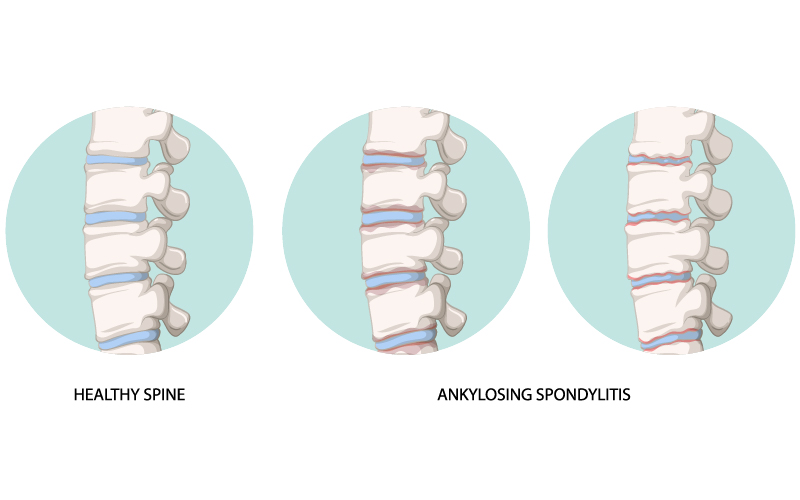
Types of spondylitis
Spondylitis includes several related diseases:
- Ankylosing Spondylitis(AS) – The Most Common Form
AS mainly affects the spine and sacroiliac joints, causing chronic back pain, stiffness, and reduced flexibility. Over time, it can lead to fusion of the vertebrae in severe cases.
- Psoriatic Arthritis(PsA)
PsA occurs in people with psoriasis and can affect joints throughout the body, including the fingers, toes, and spine. It often causes joint pain, swelling, and sometimes skin or nail changes.
- Reactive Arthritis
This form develops after an infection, typically in the urinary or gastrointestinal tract. It can cause joint inflammation, eye redness, and urinary symptoms.
- Juvenile Spondyloarthritis
The condition affects children and teenagers who experience joint inflammation and swelling and potential growth problems. Doctors can stop future complications from happening through early diagnosis identification.
- Undifferentiated Spondyloarthritis
This type includes patients who have spondyloarthritis symptoms but don’t fit clearly into a specific category. It may involve the spine, peripheral joints, or both.
- Enteropathic Arthritis
Associated with inflammatory bowel diseases like Crohn’s disease and ulcerative colitis, it causes joint inflammation along with gut symptoms such as abdominal pain and diarrhea.
Key Symptoms of Spondylitis
- Chronic back pain that lasts more than 3 months, often worse in the morning or after rest.
- Morning stiffness in the lower back or hips that improves after movement.
- Pain in the buttocks that can switch sides (a classic sign of inflammatory back pain).
- Reduced flexibility or difficulty bending due to spine stiffness.
- Fatigue that feels out of proportion to daily activity.
- Pain in other joints such as shoulders, hips, knees, heels, or small joints of the hands/feet.
- Swelling of joints (less common but can happen, especially in peripheral spondyloarthritis).
- Chest tightness or pain while breathing deeply (due to inflammation where ribs meet the spine).
- Eye inflammation (Uveitis/Iritis) causing redness, pain, blurred vision, or light sensitivity.
- Skin symptoms like psoriasis (if related to psoriatic arthritis).
- Gut symptoms like abdominal pain or diarrhea (if linked with inflammatory bowel disease).
What Causes Spondylitis? – Key Points
- The HLA-B27 gene shows a strong genetic connection to spondylitis, which raises the risk of developing the condition.
- People who have parents or siblings with spondylitis or similar conditions face an elevated risk of developing the disease.
- The immune system develops a wrong response by attacking joints and spinal tissue in the body.
- Some individuals develop inflammation after experiencing specific infections which affect their gut or urinary system.
- The spine along with sacroiliac joints and additional body regions, experiences damage because of prolonged inflammatory processes.
- Spondylitis emerges through the interaction of multiple genetic elements with immune system problems and environmental factors instead of a single defining factor.
How Is Spondylitis Diagnosed?
The diagnosis of spondylitis requires doctors to evaluate your symptoms together with physical examination results and specific diagnostic tests. Doctors perform tests to identify three main symptoms which include ongoing back pain and stiffness during mornings and restricted spine flexibility. Blood tests including HLA-B27 and ESR and CRP help doctors identify inflammation in the body. X-rays and MRI scans enable doctors to detect spine and sacroiliac joint changes and initial signs of inflammation. A rheumatologist conducts a complete evaluation of all test results to establish the final diagnosis.

Treatment Options
The treatment plan for spondylitis includes NSAIDs for pain relief and biologics for inflammation control and physical therapy for spine and joint mobility. Patients who exercise regularly and use heat and cold therapy and follow a balanced lifestyle will experience better management of their condition. The treatment of peripheral joint pain with DMARDs becomes necessary but surgery remains an infrequent option.
Lifestyle Tips for Managing Spondylitis
- Stay active and stretch daily
- Maintain good posture.
- Do back and core exercises.
- Use heat for stiffness.
- Apply cold for swelling.
- Keep a healthy weight.
- Avoid smoking.
- Eat an anti-inflammatory diet.
- Manage stress.
- Sleep on a firm, supportive mattress.
How Our Support Group Helps
Our ankylosing spondylitis support group focuses on helping patients share their experiences, learn practical management tips, and feel emotionally supported throughout their journey. In the middle of this mission stands Antardhwani, a trusted patient support group that connects people living with spondylitis and provides guidance, motivation, and reliable information. Through community discussions, expert inputs, and peer encouragement, our group ensures no one has to deal with ankylosing spondylitis alone.