Understanding the Ankylosing Spondylitis Symptoms

Ankylosing Spondylitis (AS) is a chronic inflammatory disease that primarily affects the spine, but its effects can be felt throughout the body. The journey with AS is unique for everyone, which means the severity and onset of common symptoms of ankylosing spondylitis can vary greatly from person to person.

Typically, symptoms begin to surface in late adolescence or early adulthood (usually between 17 and 45). Understanding the key signs of ankylosing spondylitis can lead to an earlier diagnosis and better management.

Early Symptoms of Ankylosing Spondylitis

The experts at Antardhwani explain that ankylosing spondylitis begins with ongoing lower back stiffness which mainly affects the morning and rest periods. Early signs may also include fatigue, mild joint aches, and discomfort in the hips or buttocks, signalling the onset of the condition.
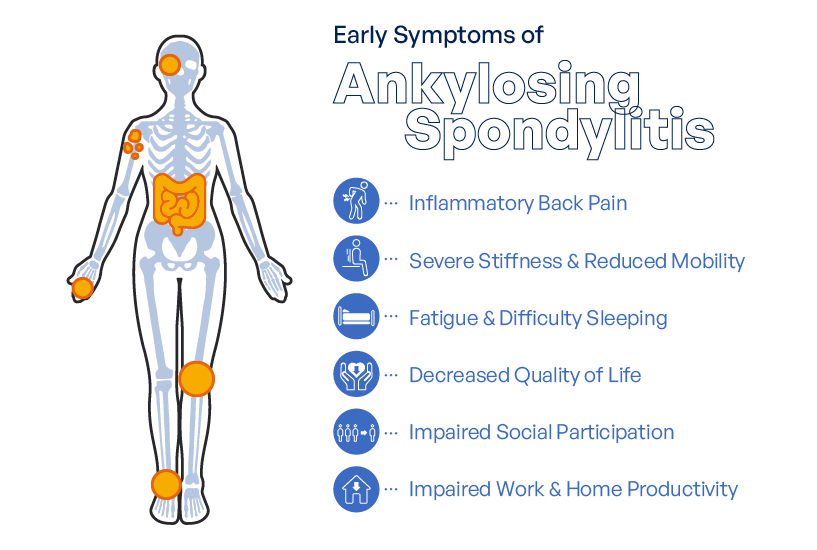
The most common and characteristic early symptoms of ankylosing spondylitis involve the lower back and pelvis, primarily due to inflammation of the sacroiliac joints (where the spine meets the pelvis).

Key Characteristics of AS Back Pain:

  • Gradual Onset: The pain and stiffness don’t usually appear suddenly; they develop slowly over weeks or months.
  • Location: Pain often starts in the lower back and buttocks. Initially, the discomfort might be felt on one side only or alternate sides, but it typically becomes persistent and felt on both sides within a few months.
  • Improvement with Activity: A defining feature of inflammatory pain (like AS) is that it tends to improve with movement, light exercise, or a warm shower, unlike mechanical back pain which is often worsened by activity.
  • Nature of Pain: The sensation is generally dull and diffuse (spread out), rather than a sharp, localized mechanical pain.
  • Timing is Key: This pain is classically worse in the mornings or after long periods of rest, including the middle of the night.

The chronic pain of AS needs to continue for at least three months to receive an AS diagnosis. The stiffness and pain symptoms from AS will eventually move from the lower back to affect the entire spine and neck region. The Ankylosing Spondylitis Support Group provides essential knowledge about their condition progression and ongoing support during their journey.

AS is a systemic disease, meaning it affects the entire body. The inflammation caused by AS often leads to a variety of ankylosing spondylitis symptoms outside of the central spine.

Common Secondary Symptoms:

Symptom Description
Fatigue Profound fatigue is one of the most common complaints. The body expends significant energy fighting chronic inflammation, which leads to persistent tiredness. This can be compounded by mild to moderate anemia.
Peripheral Joint Pain (Enthesitis) Inflammation may occur in joints outside the spine, such as the hips, knees, ankles, or shoulders. Pain in these joints, especially the hips, is common. Enthesitis—inflammation at the point where a tendon or ligament attaches to bone—can cause pain in areas like the heels or ribs.
Eye Inflammation (Uveitis/Iritis) About a third of people with ankylosing spondylitis will experience inflammation in one or both eyes, known as iritis or uveitis. Signs include a painful, red, and watery eye, blurred vision, and sensitivity to bright light (photophobia).
Bowel Inflammation Inflammation in the bowels is common and may be associated with other inflammatory conditions like Crohn’s disease or ulcerative colitis.
Early Signs In the very early stages, some individuals may experience mild fever, a general feeling of malaise, or a loss of appetite.

If AS is left untreated or progresses over many years, the chronic inflammation can lead to more severe outcomes:

  • Spinal Fusion (Ankylosis): The severe, persistent inflammation can cause new bone formation, leading to parts of the spine to fuse together. This results in loss of spinal mobility and can cause the back to become rigid and inflexible.
  • Severe Stiffness and Pain: Chronic and severe pain persists, limiting day-to-day activities and significantly impacting quality of life.

To get a deeper visual understanding of how ankylosing spondylitis affects the body and how it is managed, check out our featured video:

If you are experiencing persistent inflammatory back pain that fits this pattern—worse with rest, better with movement, and lasting more than three months—it is important to consult a doctor, preferably a rheumatologist, for proper diagnosis and a treatment plan.

Antar Dhwani